


Table of Contents
- What Are Fix and Flip Loans
- Why Banks Usually Do Not Offer Fix and Flip Loans
- Types of Fix and Flip Loans You Should Know
- How to Qualify for Fix and Flip Loans
- Step by Step Process to Get Fix and Flip Loans
- Common Mistakes to Avoid When Using Fix and Flip Loans
- Tips for First Time Investors Using Fix and Flip Loans
- Final Thoughts on Fix and Flip Loans
If you want to start flipping houses, understanding fix and flip loans is the first big step. Many new investors think buying and selling homes is simple. But without the right funding, even the best property deal can fall apart. Fix and flip loans help investors buy homes that need repairs, improve them, and sell them for profit. In this guide, you will learn how these loans work, who offers them, and how you can qualify for your first deal.
Real estate flipping can be exciting and profitable. Still, it requires planning, careful budgeting, and the right lender. Let us break everything down in simple terms so you can move forward with confidence.
What Are Fix and Flip Loans
Fix and flip loans are short term loans made for real estate investors. These loans help you buy a property, fix it, and sell it within a short time, usually within 6 to 18 months.
Unlike regular home loans, fix and flip loans focus more on the value of the property after repairs. This future value is called After Repair Value or ARV. Lenders look at the ARV to decide how much they are willing to lend.
Most fix and flip loans include money for both:
- Buying the property
- Paying for repairs
Instead of giving you all the repair money at once, lenders release funds in stages. This is called a draw schedule. After you complete part of the work, the lender checks it and then releases the next payment.
This type of loan is built for speed and flexibility. That is why many investors use it for house flipping projects.
Why Banks Usually Do Not Offer Fix and Flip Loans
Traditional banks prefer long term and low risk loans. They want borrowers who plan to live in the home for many years. A fix and flip project does not fit this model.
Here are a few reasons banks often say no:
- The home may be in poor condition
- The investor plans to sell quickly
- The income from the project is not stable
Banks also follow strict rules. They usually cannot lend based on future property value. Because of this, many investors turn to private lenders or hard money lenders instead.
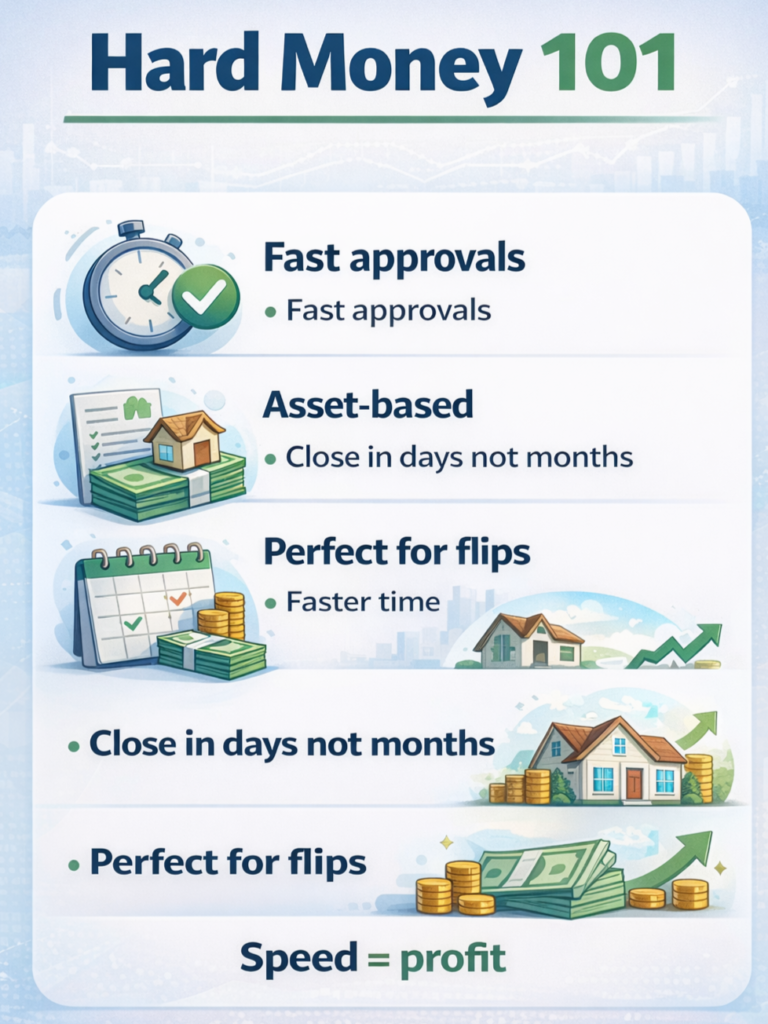
Hard money lenders focus on the property value and the deal itself. They are often more flexible and faster than banks.
Types of Fix and Flip Loans You Should Know
There are several ways to finance your first flip. Let us look at the most common options.
Hard Money Loans from Hard Money Lenders
Hard money lenders are private companies or individuals who lend money for real estate deals. They care more about the property and less about your personal income.
Key features:
- Loan term is usually 6 to 12 months
- Interest rates are higher than bank loans
- Approval is much faster
- Based mainly on property value
Many new investors choose hard money lenders because they can close deals quickly. Speed is important when you are competing with other buyers.
Bridge Loans
Bridge loans are short term loans used to cover a gap in funding. For example, if your money is tied up in another deal, a bridge loan can help you secure a new property.
These loans are temporary. Investors usually repay them by selling the property or refinancing.
Direct Lender Fix and Flip Loans
Some companies specialize in fix and flip loans only. These lenders combine speed with more organized processes. They may offer better terms if you have good credit or past experience.
Some benefits include:
- Online application
- Clear draw process
- Flexible pricing options
This option is great for beginners who want a simple and guided process.
Home Equity Line of Credit
If you already own a home, you may use a home equity line of credit to fund your flip. Interest rates are often lower than hard money loans.
But there is risk. If the project fails and you cannot repay the loan, you could lose your home. This option should be used carefully.
How to Qualify for Fix and Flip Loans
Many first time investors worry about qualifying. The good news is that approval depends heavily on the deal itself.
Here are the main factors lenders look at.
The Strength of the Deal
Lenders often follow the 70 percent rule. This means:
You should not pay more than 70 percent of the ARV minus repair costs.
Example:
If ARV is 200000
70 percent of 200000 is 140000
If repairs cost 30000
Maximum purchase price should be 110000
This rule gives room for profit and protects both you and the lender.
Your Credit Score
Most hard money lenders require a minimum credit score between 620 and 660. A higher score can help you get better interest rates.
Even though the loan is based on the property, your credit still matters.
Your Cash Reserves
You will need a down payment, usually 10 to 20 percent of the purchase price. Lenders also want to see that you have extra cash to cover:
- Property taxes
- Insurance
- Monthly interest payments
This shows that you can handle delays or unexpected costs.
Your Plan and Budget
Lenders want a clear plan. You should prepare:
- Detailed repair list
- Contractor estimates
- Timeline
- Exit plan
Your exit plan usually means selling the home for profit. A strong plan increases your chances of approval.
Step by Step Process to Get Fix and Flip Loans
Understanding the process makes everything less stressful. Here is what usually happens.
Step 1 Prepare Your Documents
Gather:
- Purchase agreement
- Repair estimates
- Scope of work
- Business documents if you have an LLC
Step 2 Submit Application
Many lenders offer online applications. You provide information about the property and your experience.
Step 3 Receive Loan Terms
If approved, you receive a term sheet. This includes:
- Loan amount
- Interest rate
- Loan length
- Fees
Review this carefully before moving forward.
Step 4 Property Evaluation
The lender orders an appraisal to confirm the ARV. They also review your repair budget.
Step 5 Closing
Once approved, you sign documents and close on the property. The lender funds the purchase.
Step 6 Draw Process
As repairs are completed, you request funds. The lender inspects the work and releases money in stages.
Common Mistakes to Avoid When Using Fix and Flip Loans
New investors often make simple mistakes. Avoiding these can protect your profit.
Underestimating Repair Costs
Always add extra money to your repair budget. Unexpected problems like plumbing or electrical issues can increase costs quickly.
Ignoring Monthly Costs
Remember that you pay interest every month. The longer you hold the property, the more you pay.
Holding costs include:
- Interest payments
- Insurance
- Taxes
- Utilities
Choosing the Wrong Hard Money Lenders
Not all hard money lenders are the same. Some may have high fees or slow draw processes. Ask questions before signing:
- Are there early payoff penalties
- How fast are draw payments released
- What are total fees
A good lender can make your project smooth. A bad one can slow everything down.
Tips for First Time Investors Using Fix and Flip Loans
If this is your first flip, keep these tips in mind:
- Start with a smaller project
- Work with experienced contractors
- Build a strong local real estate team
- Do not rush your numbers
- Always plan for delays
Success in flipping is not about luck. It is about careful planning and smart decisions.
Final Thoughts on Fix and Flip Loans
Fix and flip loans open the door to real estate investing. They give you access to short term funding that traditional banks usually do not provide. While interest rates are higher, the speed and flexibility allow you to move quickly on good deals.
By working with trusted hard money lenders, following the 70 percent rule, and creating a solid plan, you can reduce risk and increase your chance of profit.
Your first flip may feel challenging, but with the right financing and preparation, it can also be the start of a rewarding investment journey Contact Us so we can help you to start.
Leave a Reply