
Table of Contents
- What Is Hard Money Lending?
- Why Maryland Real Estate Investors Use Hard Money
- How Hard Money Lending Maryland Works
- Benefits of Hard Money Lending Maryland
- Understanding Hard Money Lenders in Maryland
- Maryland Real Estate Market Overview
- Loan Requirements for Hard Money Lending Maryland
- Risks and Considerations
- How to Choose the Best Hard Money Lenders
- Step-by-Step Guide to Applying
- FAQs About Hard Money Lending Maryland
Hard Money Lending Maryland has become one of the most powerful financing tools for property investors who need quick access to capital. In today’s competitive real estate market, waiting weeks or even months for traditional bank approval simply isn’t practical. That’s where hard money lenders step in.
Whether you’re flipping properties in Baltimore or acquiring rental units near Annapolis, fast financing can make the difference between winning or losing a deal. Hard money loans are designed for speed, flexibility, and asset-based lending perfect for investors ready to act quickly.
Let’s break it down step by step.
What Is Hard Money Lending?
Hard money lending is a short-term, asset-based financing option primarily used in real estate investing. Unlike traditional loans from banks, these loans are secured by the value of the property itself not your credit score alone.
Hard money lenders focus mainly on:
- Property value
- Investment potential
- Exit strategy
- Renovation scope
This makes Hard Money Lending Maryland especially attractive to investors who may not qualify for conventional loans.
Why Maryland Real Estate Investors Use Hard Money
Maryland’s real estate market moves fast. Investors often compete against cash buyers. Traditional lenders typically require:
- Extensive paperwork
- Strict credit requirements
- Long approval timelines
Hard money lenders, however, can approve loans within days. In hot markets like Silver Spring and Rockville, speed matters.
How Hard Money Lending Maryland Works
Loan Structure and Terms
Most hard money loans in Maryland have:
- 6–18 month terms
- Interest-only payments
- Higher interest rates than banks
- 60–75% loan-to-value (LTV) ratios
These loans are designed for short-term investments not long-term mortgages.
Approval Process Explained
Approval typically involves:
- Property evaluation
- Repair cost assessment
- After-repair value (ARV) calculation
- Exit strategy review
Some lenders can close in as little as 7–10 days.
Role of Property as Collateral
The property is the primary security for the loan. This reduces risk for lenders and speeds up approval.
Benefits of Hard Money Lending Maryland
Speed of Funding
Time kills deals. With Hard Money Lending Maryland, investors can close quickly sometimes in under two weeks.
Flexible Qualification Requirements
Hard money lenders care more about the deal than your debt-to-income ratio. That flexibility opens doors for:
- Self-employed investors
- New flippers
- Borrowers with past credit issues
Opportunities for Fix-and-Flip Projects
Many Maryland investors use hard money fix and flip houses. The strategy is simple:
- Buy undervalued property
- Renovate quickly
- Sell at higher value
Because hard money loans are short-term, they align perfectly with flip timelines.
Let`s Talk about Hard Money Lenders in Maryland
Who Are Hard Money Lenders?
Hard money lenders can be:
- Private individuals
- Investment groups
- Specialized lending companies
Unlike large institutions, they often operate locally and understand the Maryland market.
Private Lenders vs Institutional Lenders
Private lenders
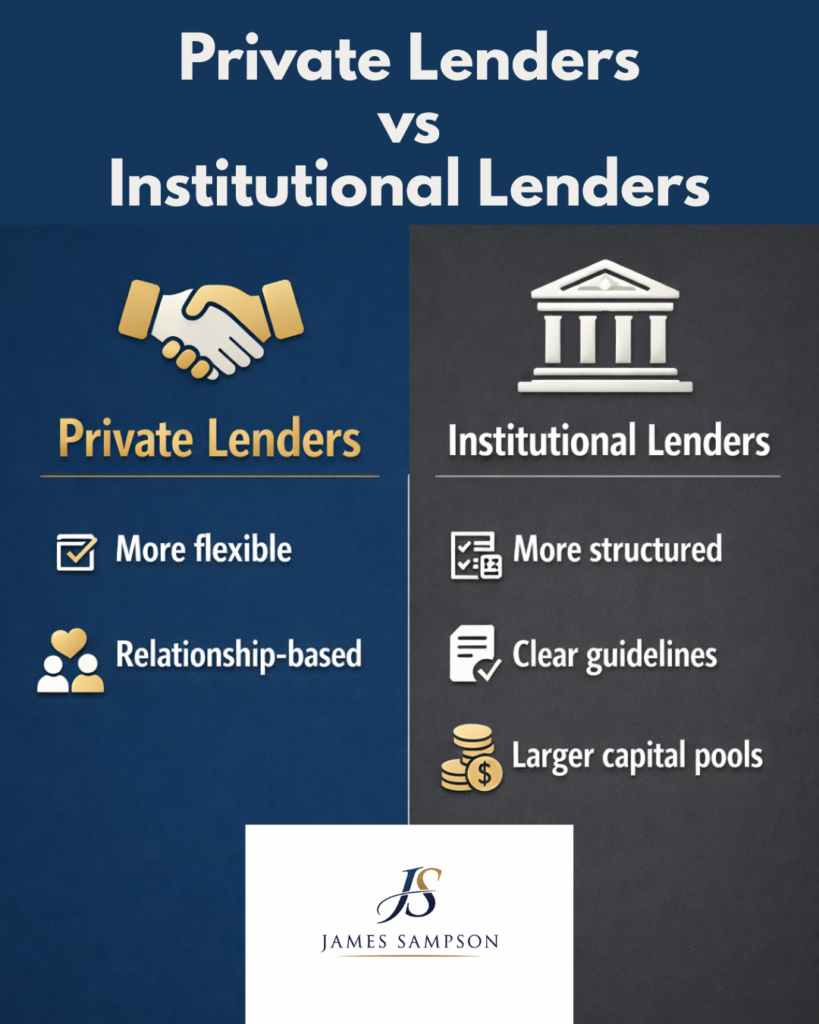
Private lenders are often more flexible in their approach, tailoring financing solutions to the specific needs of borrowers. Their decisions are typically relationship-based, meaning they place significant value on trust, communication, and personal connections with clients. This flexibility allows them to adapt terms, timelines, and structures in ways that institutional lenders may not. For real estate investors or business clients, private lenders can be especially appealing because they prioritize speed, adaptability, and individualized arrangements over rigid processes.
Institutional lenders
Institutional lenders, on the other hand, operate with more structure and clear guidelines. Their lending practices are standardized, ensuring consistency and compliance with regulatory frameworks. While this can sometimes make the process slower or less adaptable, it provides borrowers with transparency and predictability. Institutional lenders also have access to larger capital pools, enabling them to fund bigger projects and offer more competitive rates. For borrowers seeking stability, scale, and long-term financing options, institutional lenders provide a reliable and well-established path.
What Makes a Reputable Lender?
Look for:
- Transparent fees
- Clear loan terms
- Strong local experience
- Positive borrower reviews
You can also review Maryland lending regulations via the official state site:
https://www.dllr.state.md.us
Maryland Real Estate Market Overview
Key Investment Areas in Maryland
Top markets include:
- Baltimore
- Columbia
- Frederick
Each area offers unique opportunities from urban rehabs to suburban rentals.
Market Trends and Growth Opportunities
Maryland benefits from:
Proximity to Washington D.C.
- Strong job market
- Government and healthcare sectors
- These factors create steady housing demand.
Loan Requirements for Hard Money Lending Maryland
Down Payment Expectations
Most lenders require:
- 20–30% down payment
- Rehab budget reserves
Property Evaluation Criteria
Lenders assess:
- Current market value
- Comparable sales
- Renovation scope
- ARV projections
Exit Strategy Importance
You must clearly outline how you’ll repay the loan:
- Property resale
- Refinancing
- Rental income
Without a strong exit plan, approval becomes difficult.
Risks and Considerations
Higher Interest Rates
Hard money loans typically carry rates between 8% and 15%. That’s significantly higher than conventional mortgages.
Shorter Loan Terms
If your project runs behind schedule, you may face penalties or extensions.
Managing Project Timelines
Construction delays can hurt profits. Always build contingency time into your plan.
How to Choose the Best Hard Money Lenders
Questions to Ask Before Signing
- What are the total fees?
- Are there prepayment penalties?
- What happens if the project runs long?
Comparing Loan Offers
Always compare:
- Interest rates
- Points
- Closing costs
- Extension fees
The lowest rate isn’t always the best deal.
Step-by-Step Guide to Applying
Preparing Documentation
Have ready:
- Purchase agreement
- Rehab budget
- Contractor estimates
- Exit plan
Closing the Deal Quickly
Once approved:
- Appraisal or valuation
- Final underwriting
- Funding
Funds are often wired directly to closing.
FAQs About Hard Money Lending Maryland
- Is Hard Money Lending Maryland legal?
Yes, it is legal and regulated under Maryland lending laws.
- How fast can I get funding?
Many hard money lenders can fund in 7–14 days.
- Do I need good credit?
Not necessarily. The property value matters more.
- What is the typical interest rate?
Rates usually range from 8%–15%, depending on risk.
- Can beginners use hard money loans?
Yes, but having a solid exit strategy is critical.
- What types of properties qualify?
Single-family homes, multi-family units, and some commercial properties qualify.
Conclusion: Is Hard Money Lending Maryland Right for You?
Hard Money Lending Maryland offers speed, flexibility, and opportunity for serious property investors. While the costs are higher than traditional loans, the ability to close quickly can outweigh the expense especially in competitive markets.
If you’re flipping homes, renovating distressed properties, or need short-term capital, hard money lenders may provide the financial edge you need.
Just remember success depends on planning, budgeting, and execution. With the right strategy, hard money financing can become one of the most powerful tools in your real estate investing toolbox.
Leave a Reply